
We analyze the magnetic field of the current inside your chip
Nitrogen-vacancy centers: atomic sensors in synthetic diamond
A nitrogen-vacancy (NV) center is a point defect in diamond — a nitrogen atom sitting next to a gap in the carbon lattice. Its electronic spin shifts in the presence of a magnetic field, through the Zeeman effect, and that shift shows up in the light the defect emits.
We build sensors with a dense layer that contains about 70b of these NV centers just below the diamond surface, so we can read magnetic fields across a wide area at once.
A magnetic map in minutes, with nothing touching the die
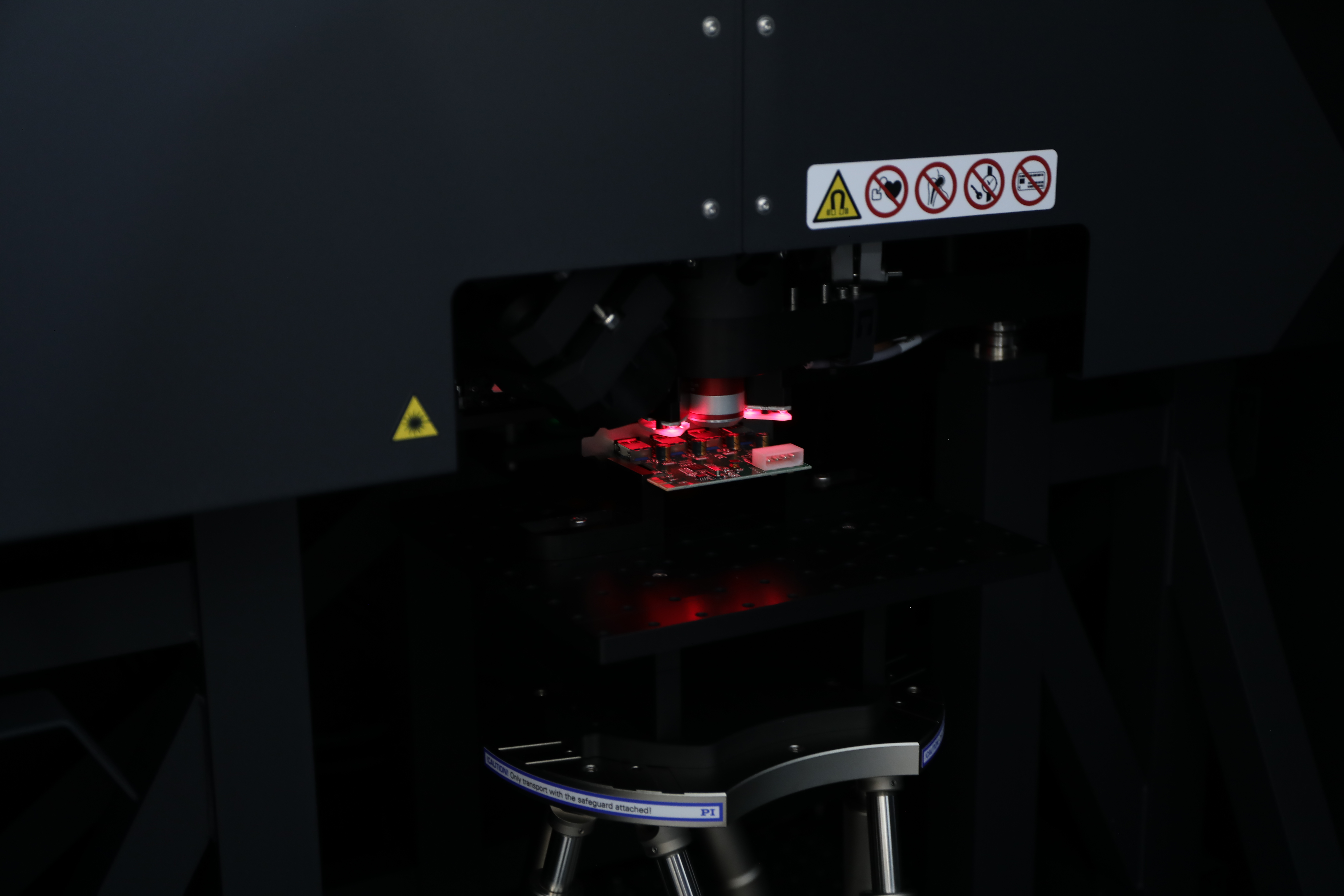
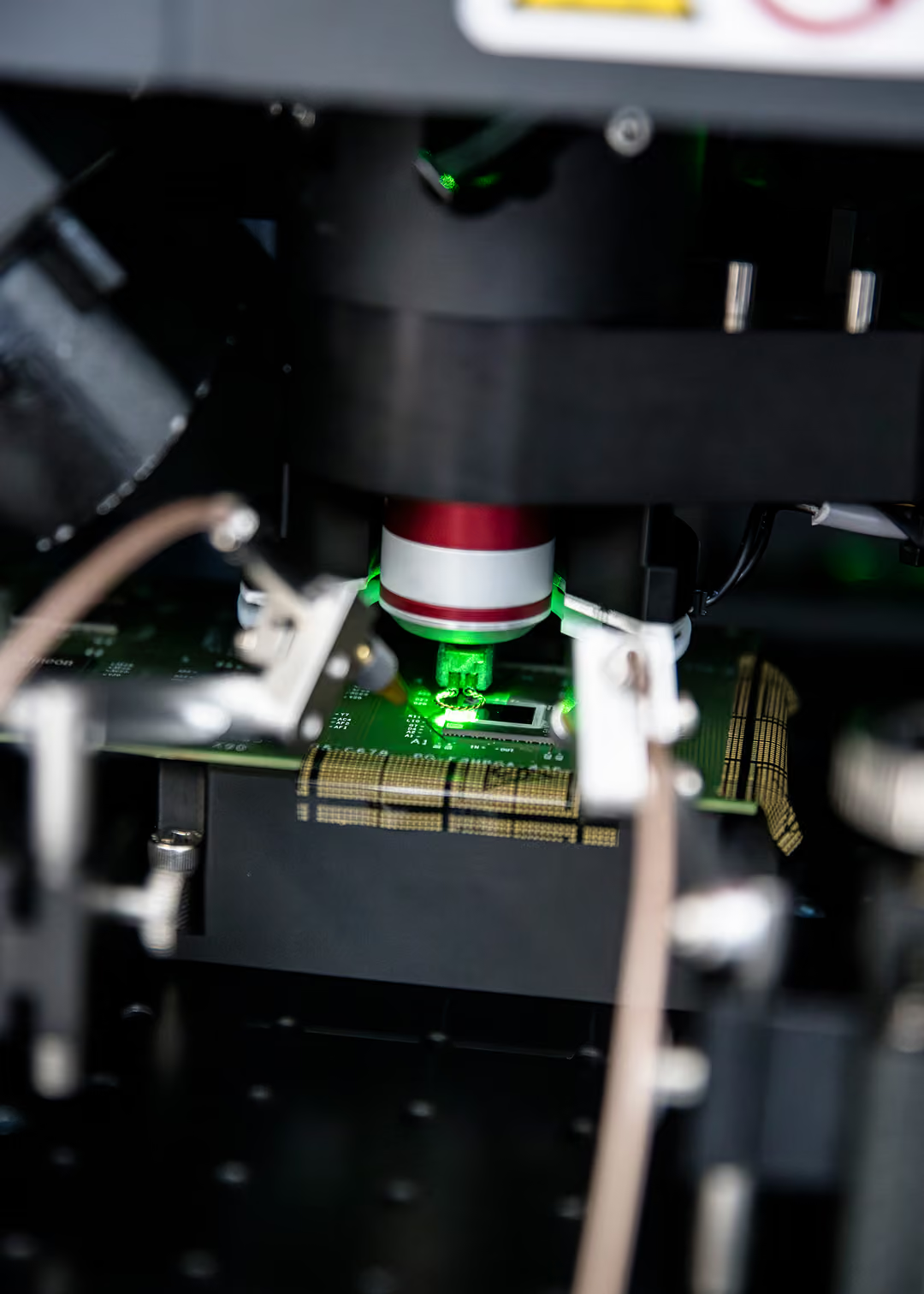
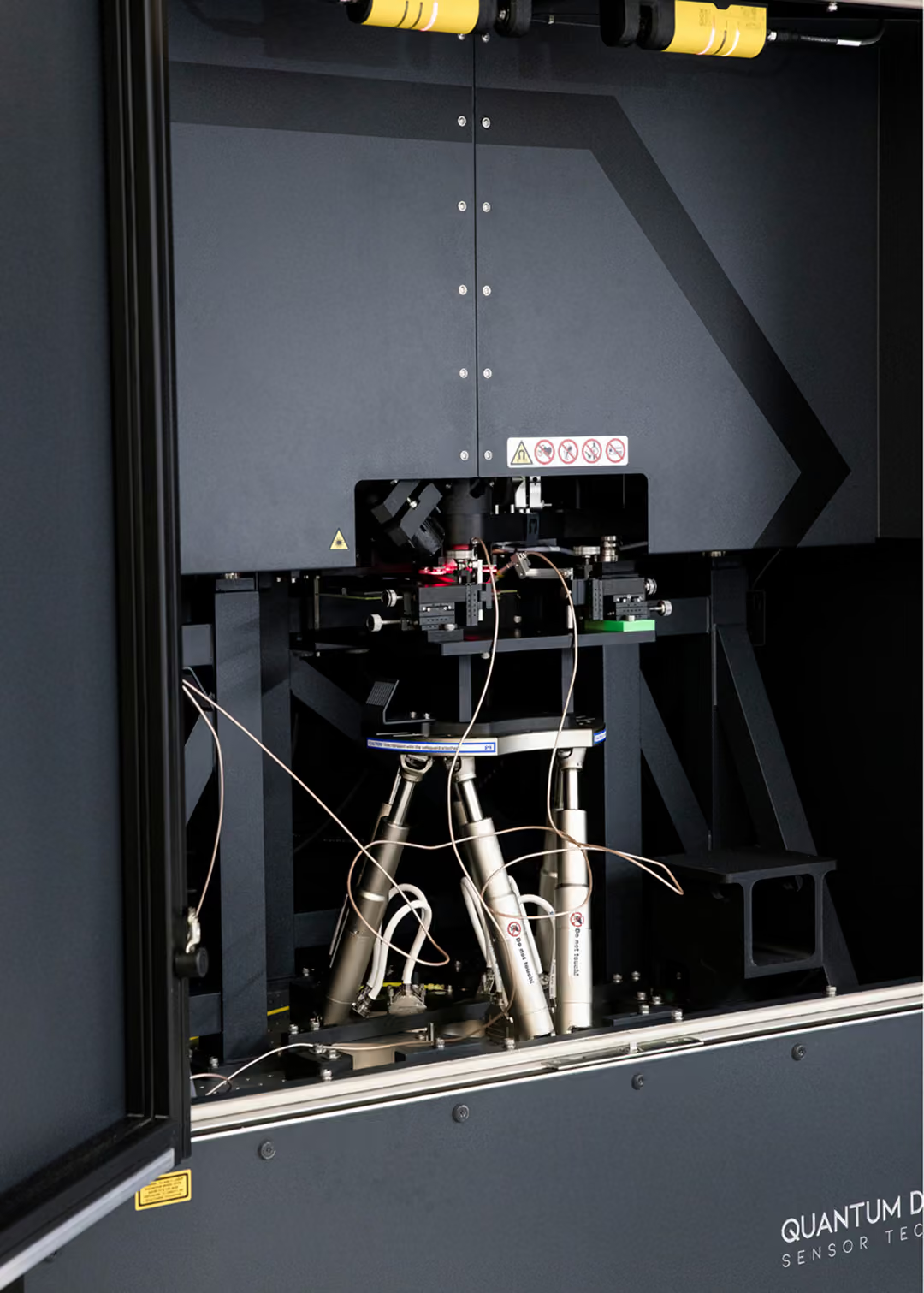
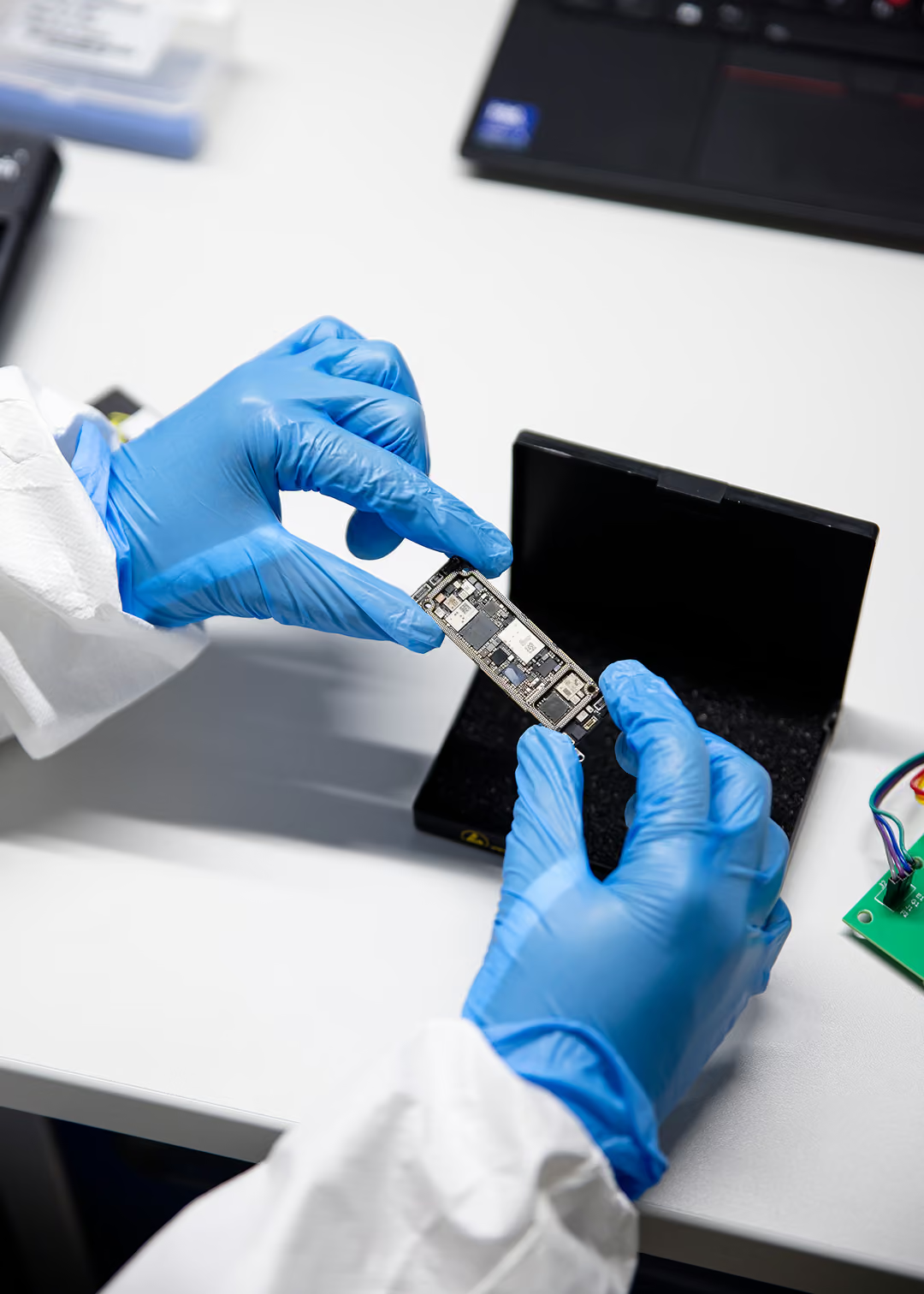
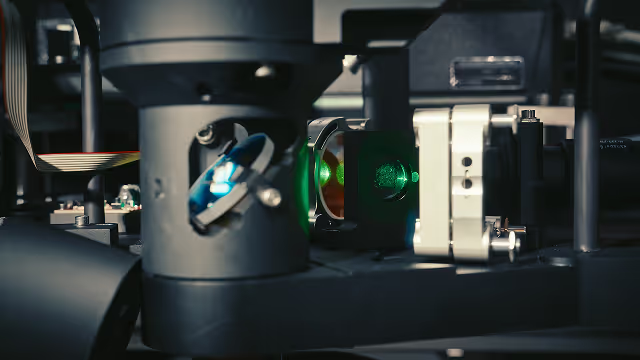
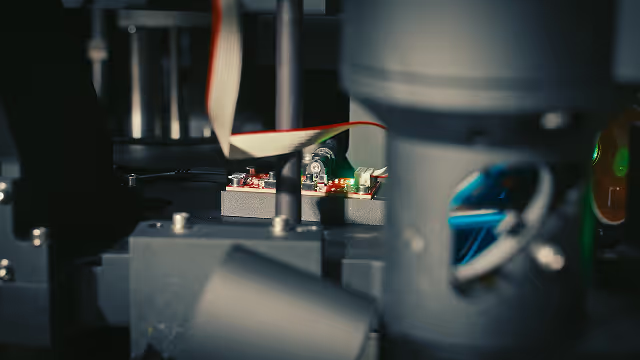
We place the diamond sensor directly on the device under test. A green laser initializes the NV spins, microwaves address them, and the spin-dependent fluorescence provides the readout.
The result is a full magnetic-field map with micrometer resolution across a field of view spanning millimeters — acquired in minutes, at room temperature, with the chip fully intact.
From magnetic field to a 3D map of the current
A current and its magnetic field are linked by the Biot–Savart law. We invert that relationship to reconstruct the path of the current through the layer stack and render it in three dimensions.
This is direct measurement plus physically grounded reconstruction: we measure the field, then solve for the current that produced it.
We see the failures other tools miss
Because we see the current itself, not just the structure, we localize opens and partial opens, shorts across a wide range, leakages, backside power-delivery-network defects, and current crowding in wide-bandgap power devices — in the package and the die, inside the 2.5D and 3D stacks that defeat structural inspection.
Unprecedented depth reach, resolution and speed for testing advanced semiconductors.
Our technology metrics:

Magnetic Current Imaging
- Detects shorts, leakages and opens
- Sees details up to 100× smaller than traditional inspection, with 100–1,000× lower noise and 3-10× higher sensitivity

Widefield Technique
- Up to 3 × 3 mm field of view
- Stitching up to 5 × 5 cm
- Results in minutes, not hours
- Ideal for large-area defect mapping

Operational Conditions
- Robust imaging and testing at room temperature
- Stable down to cryogenic temperatures and up to 700 °C
The chip survives the test
No cross-sectioning, no de-processing, no probes into the die. The same sample can go back into the flow or on to the next measurement. As chips move into hybrid bonds and TSVs, that's the difference between finding the defect and destroying the evidence.
The cleanest chip is the one you don't scrap
Every defective die consumes the same energy, materials, and process steps as a working one. Catch defects earlier and you don't just raise yield — you cut the carbon and materials locked into every wafer that would otherwise be thrown away.
Our engagements in the quantum race
Read about our partner projects: